Coaching reaction, distance, and tactical timing in fencing
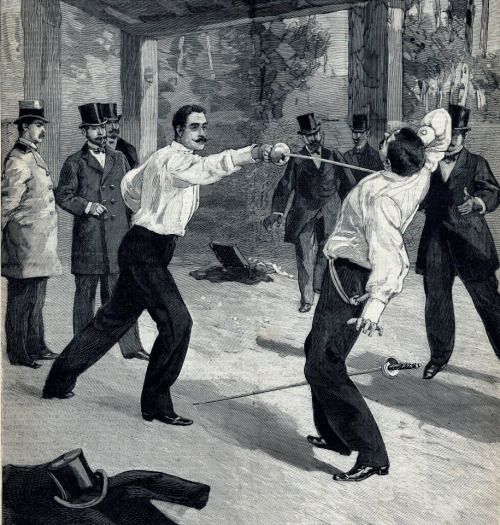
Timing differences in fencing are often measured in fractions of a second. In competitive exchanges, small variations in reaction, decision, and execution produce disproportionately large tactical consequences. In a real fencing fight, of course, this could mean the difference between life and death. But a successful action rarely depends on isolated movement speed alone. It depends on whether the athlete is operating inside a window where perception, decision, and execution remain possible.
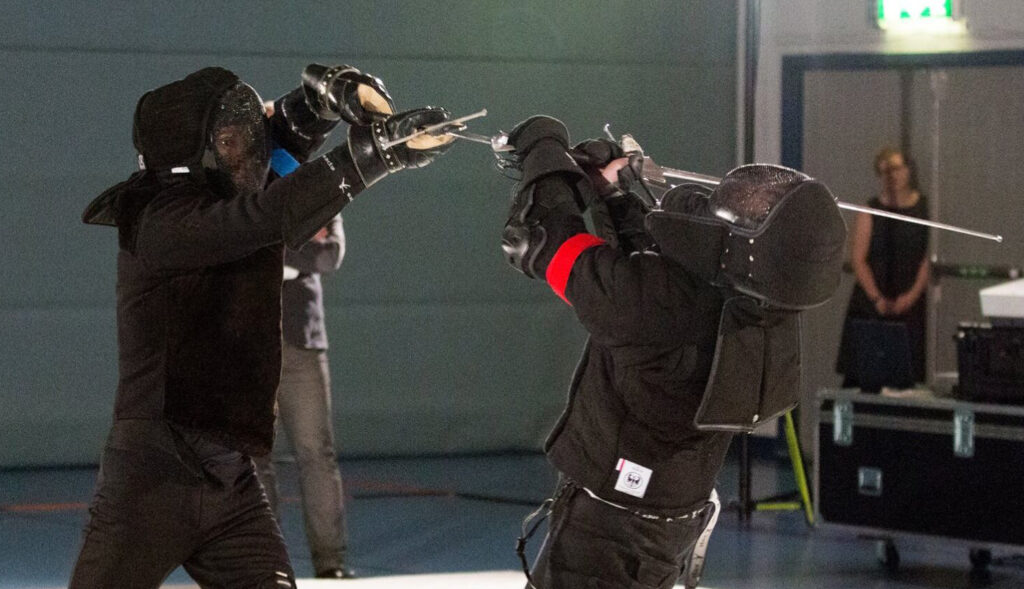
“He’s so fast, he’s hitting me before I can parry.” I’ve heard this from many fencers, but in a fencing bout, timing isn’t primarily about split-second reflexes. Reflexes may be the edge, but it’s not the foundation. Tiny shifts in reaction, decision, and execution can tip the scales, but they are there to amplify the tactical choice. Winning an exchange rarely hinges on raw speed alone. It’s about positioning yourself in a moment where you can perceive, decide, and act before the window slams shut.
Counterintuitively, research from modern sport fencing provides a useful starting point for us in historical fencing because it isolates measurable components of performance under uncertainty. Historical tactical frameworks, however, describe the same timing dynamics from within the practice of fencing itself. Read together, these perspectives support a coaching model in which speed emerges from how an athlete builds, preserves, and exploits time.
The central question is therefore not how to move faster. It is how to create conditions in which action can occur before time collapses. To make it sound dramatic.
What we actually mean by “speed”
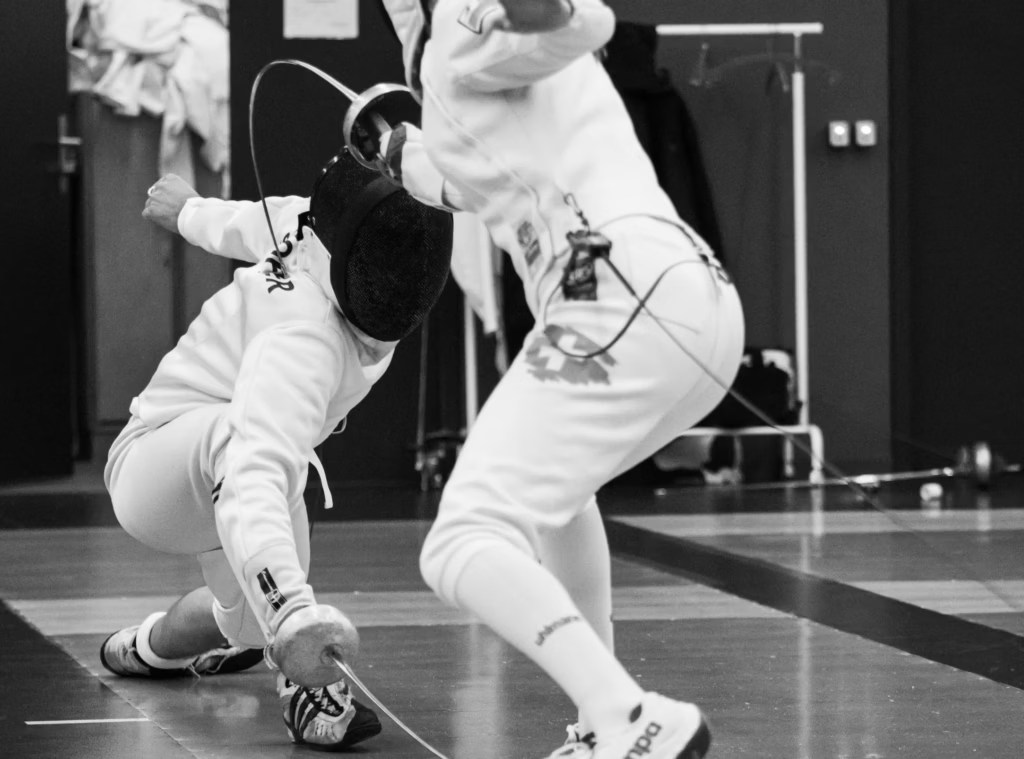
Before discussing how fencers manage time, it helps to clarify what sport science is measuring when it talks about speed. In research on fencing performance, speed is not treated as a single trait. It is decomposed into several components that describe different stages of an action.
Reaction time (RT) is the time between perceiving a stimulus and initiating movement. It reflects perception and decision-making: recognizing a situation and committing to a response.
Movement time (MT) is the time from movement initiation to completion. In a lunge, it is the duration from takeoff to touch. This component reflects physical execution: force production, coordination, and technical efficiency.
Response time (or total response time) is the sum of RT and MT. It represents the full interval from perception to completed action. In real exchanges, this total duration determines whether an action succeeds.
Choice reaction time is reaction time when multiple responses are possible. Instead of reacting to a single stimulus, the athlete must select the correct option. This measures decision speed under uncertainty, which is closer to real fencing conditions than simple reflex tests.
A foundational fencing study comparing elite and novice fencers measured RT, MT, total response time, and accuracy across different target-choice conditions and distances. The key finding was not simply that elite fencers moved faster. They reacted faster while maintaining higher accuracy, especially when forced to choose between multiple options.
For coaches, the implication is critical. Speed cannot be reduced to movement velocity alone. Improving one component while degrading decision quality or accuracy can make the athlete faster in isolation but worse in competition. A fencer does not compete with raw movement speed. They compete with a system in which perception, decision, and execution must function together.
Reaction under uncertainty: what elite fencers actually do better
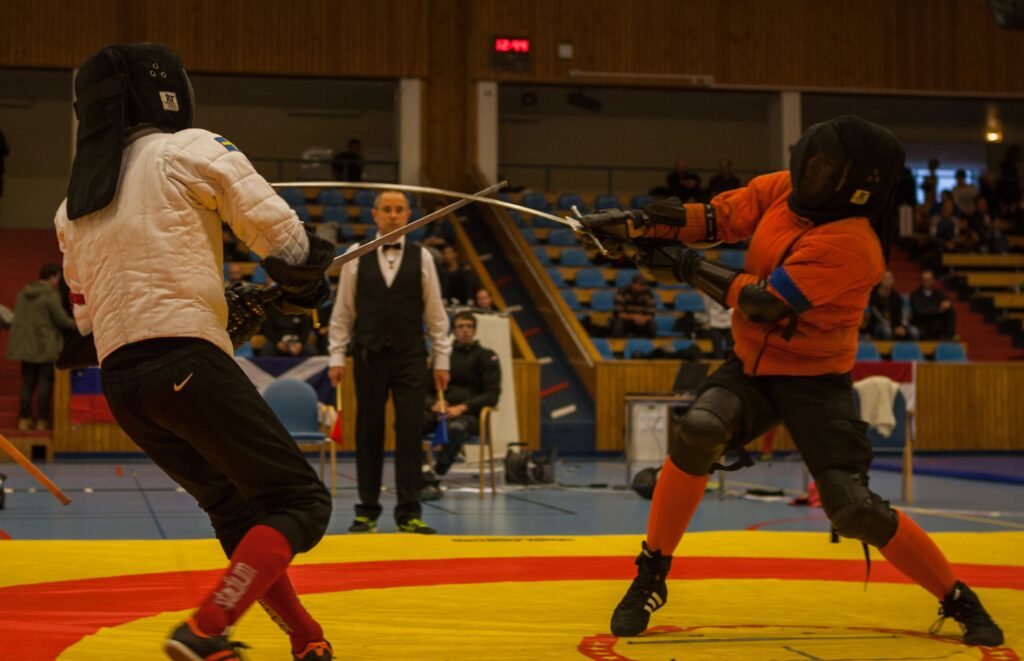
So, when researchers compare elite and novice sport fencers, they don’t reduce performance to simple movement speed. Instead, they examine behaviour under uncertainty. Athletes are required to respond to multiple potential targets, ambiguous stimuli, and situations that evolve while the action is already underway. Under those conditions, elite fencers consistently maintain faster total response times while preserving accuracy.
The important point is not that elite athletes are universally faster in a mechanical sense. The difference emerges most clearly when the problem becomes informational. Expertise is expressed in how efficiently the athlete interprets the situation and commits to action. Elite fencers extract relevant cues earlier and convert perception into motor output with fewer unnecessary adjustments. Their decisions are not rushed; they are prepared in advance by experience and stabilized by ingrained movement patterns.
Perceptual research supports this interpretation. Studies of visual attention and anticipation show that experienced fencers identify meaningful cues earlier in an opponent’s motion. Their advantage begins before the visible action is complete. They are not merely reacting to the end of an exchange. They are operating inside its development, using learned motor solutions that allow immediate execution once recognition occurs.
For coaches, this reframes reaction. Reaction is not primarily a muscular property. It is a perceptual–decisional skill embedded in movement and shaped by training history. It only exists inside the geometry of the exchange.
This leads to a practical coaching question. If reaction depends on available decision space, where does that space come from? How can a fencer increase their own time while reducing the opponent’s?
Distance: the primary source of time
Time in fencing is spatial before it is neurological. Distance is the first and most important generator of usable time because it determines how much information can be processed before action becomes unavoidable. Every exchange contains a decision window. That window expands or contracts according to measure.
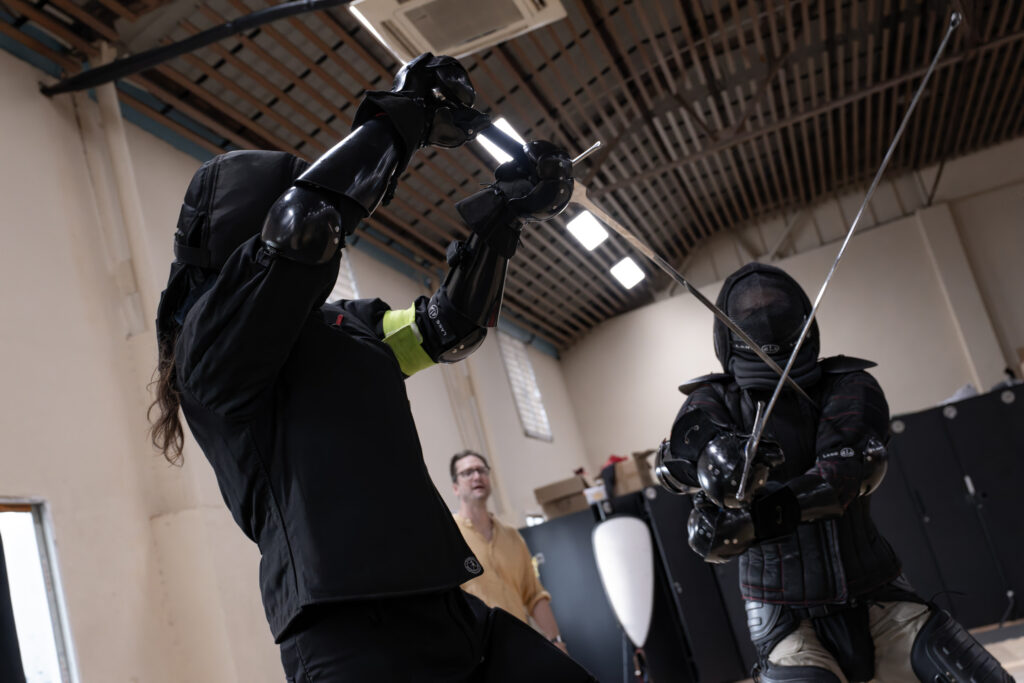
When distance collapses, the decision window collapses with it. When distance is controlled, perception and choice regain room to operate. Coaches often teach footwork as a technical category, but distance is not simply a drill or a collection of steps. It is the environment in which all timing decisions occur. The athlete who controls distance is not merely moving efficiently; they are shaping how much time exists inside the exchange.
This is why poor measure produces desperation. A fencer who repeatedly stands in the opponent’s optimal range without intention forces themselves into compressed decision windows. Under those conditions, even correct perception arrives too late to be useful. The athlete appears slow not because their reflexes are inferior, but because their spatial choices erase the time required to act.
Historical fencing language recognizes this. The transition from zufechten into krieg describes not only a change in tactical phase but a change in temporal structure. Closing distance is not neutral. It transforms the exchange from a space of preparation into a space of immediate constraint. Training how to enter the opponent’s space, how to take angles, and how to deny stable measure is therefore the earliest stage of creating tactical time advantage. This article will not attempt to catalogue the many methods by which that advantage can be achieved, we’ll have to limit ourselves here to the more fundamental insight that distance management is the first act of time management.
Sport science supports this interpretation indirectly. Experiments that manipulate action distance show predictable changes in response timing and commitment. Longer actions require earlier decisions. Shorter distances reduce the margin for correction. In both cases, the athlete is solving a different temporal problem because the geometry has changed. Coaches recognize the same phenomenon in live fencing: measure is time made visible.
But distance alone does not guarantee usable time. Space creates opportunity only if the body is organized to exploit it. Without structural stability, available time cannot be converted into action.
Structure: converting time into action
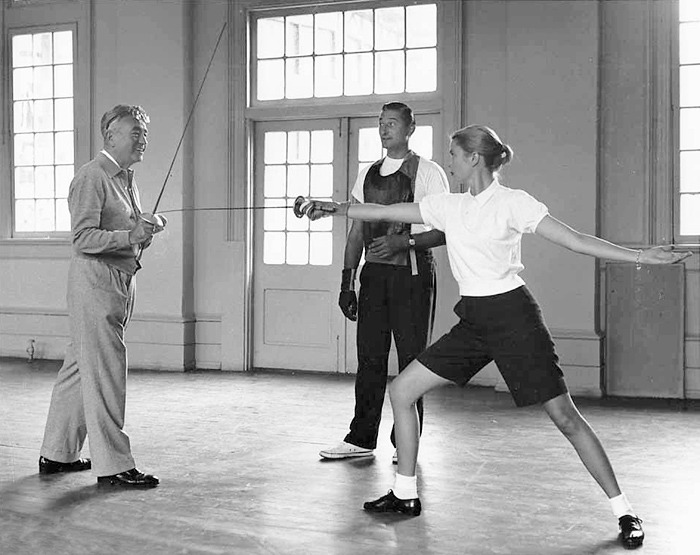
Structure is the bridge between perception and execution. A fencer may recognize the correct moment, but if posture is compromised, action is delayed by mechanical repair. Balance must be restored. Alignment must be corrected. Only then can the decision be expressed. The time spent repairing the body is time that cannot be used tactically.
From the outside, this often looks like hesitation. In reality, it is what I call a structural debt. The athlete has borrowed speed from posture and must repay it before acting again.
Research on mid-action adaptation shows that once a committed attack is underway, options narrow. Movement becomes more terminal. The body is traveling toward a fixed outcome, and the ability to change decisions decreases. Elite sport fencers do not avoid commitment; they manage it. They attack in ways that preserve recoverability. Their structure allows them to continue acting after the first movement rather than freezing at the end of it.
In modern sport fencing, it is common to see athletes sacrifice structure deliberately to gain immediate speed or reach. A single action may land faster, but the athlete enters a phase of vulnerability while recovering balance. In historical fencing contexts, where the objective is not simply to score first but to remain untouched, the consequences of structural collapse are even more severe. The exchange is not finished when the first strike is thrown. It continues until one fighter can no longer act. As a sidenot, this is why we have an afterblow in our rulesets. It is intended to ensure a balanced way of fencing, and it’s even more prominent in the Frequens motus rules (continuous fencing).
The dynamic of structural debt produces a familiar pattern. An attacking fencer may appear explosively fast during the initial barrage while their posture degrades with each step. An experienced defender does not attempt to outrun that speed. Instead, they manage distance and maintain structure, absorbing pressure until the attacker’s movement reaches its mechanical limit. At that moment, the attacker must repair posture before defending. The defender acts inside that recovery window.
From the outside, the defender appears fast. Internally, they are simply preserving time while the attacker spends it.
This distinction matters for coaching. Reaction speed is meaningless if the athlete cannot act again. Exchanges are rarely decided by the first action alone. They are decided by who still has options after that action. Structure determines whether time survives contact with movement.
Structure converts geometric time into functional time. Distance may create the opportunity to decide, but only structure allows that decision to be expressed without interruption. Without structural integrity, available time collapses into recovery.
Once time exists and can be used, the exchange becomes a contest over who owns it.
Initiative: Vor, Nach, and the ownership of time
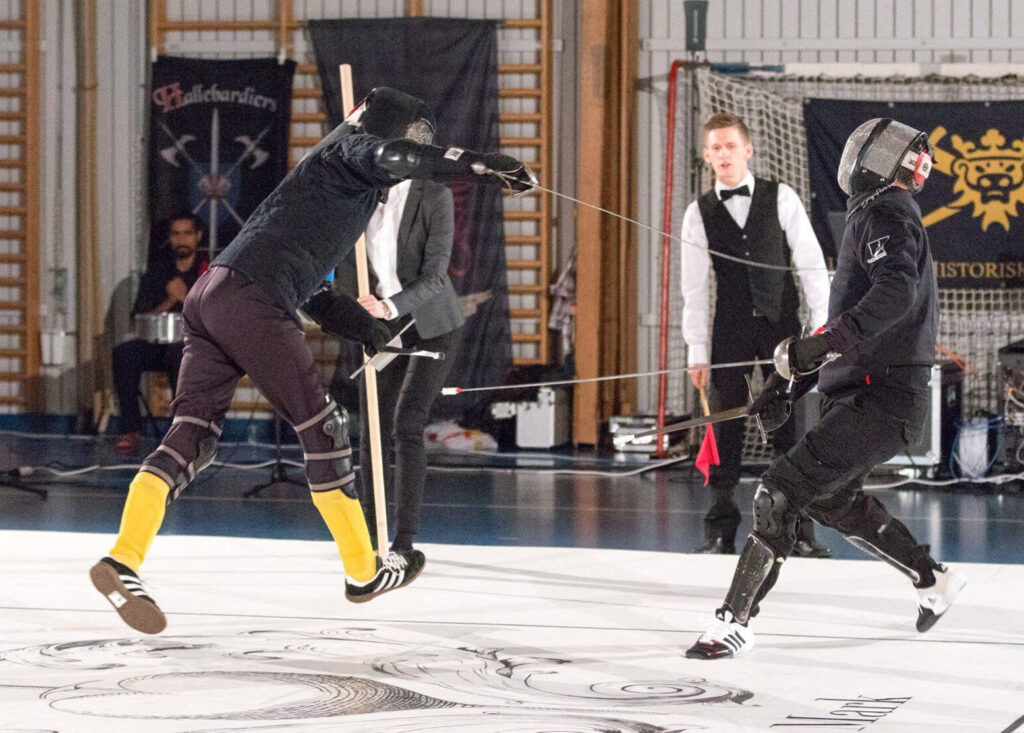
Historical fencing language offers a pretty decent vocabulary for describing how time is contested inside an exchange. In the German tradition, for example, Vor and Nach are best understood as states of initiative.
Vor is the condition in which a fencer forces the opponent to respond. Nach is operating inside the opponent’s initiative. These concepts are descriptions of time ownership. They tell us who is currently shaping the decision space.
When you are in Vor, the opponent is solving your problem. When you are in Nach, you are solving theirs.
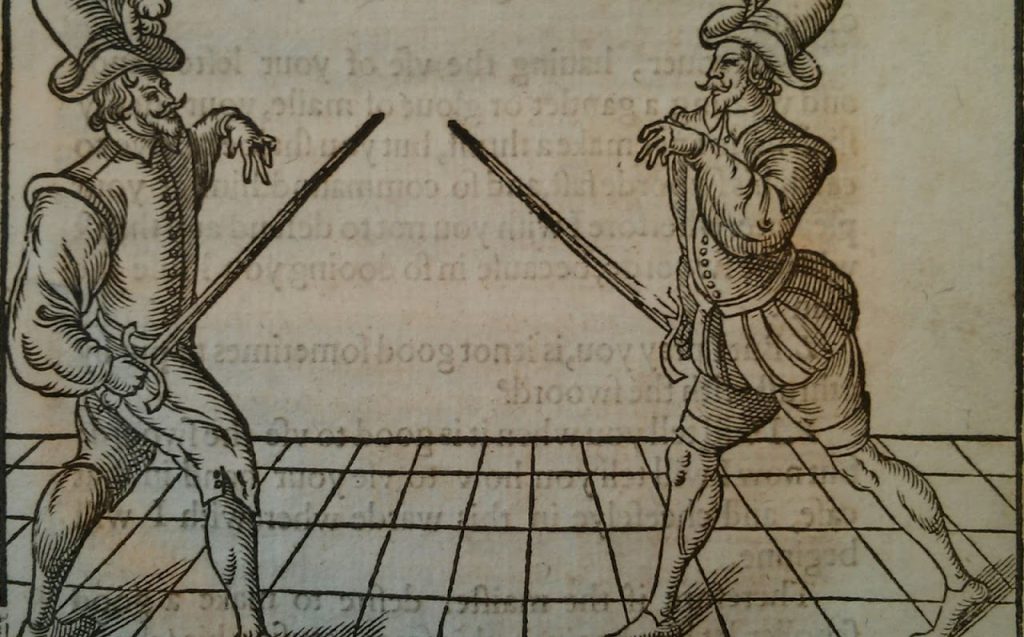
This framing becomes clearer when placed next to the later Italian concept of tempo, which is frequently misunderstood and often hard to define. But in practice, tempo describes the time of any given action. It is a relational measure of time, not a mechanical unit. Its duration depends on distance, commitment, structure, and the performer’s ability to execute. Some actions produce wide windows in which multiple responses are possible. Others produce narrow windows that tolerate almost no delay. So, tempo is the term that describes that functional time frame.
An action performed inside the opponent’s action is therefore in tempo (which should be understood as inside the timeframe of the action). It occupies the space where the opponent has not yet recovered the freedom to act independently.
Returning to the German terminology, a fencer in Nach seeks precisely this condition. They act in tempo to exploit the opponent’s action before recovery occurs. Acting in tempo is how reaction becomes initiative. It is the moment where a defender ceases to solve the opponent’s problem and begins imposing their own.
This transition is what the German sources describe with the word Indes. Indes does not introduce a new tactical category; it describes how action occurs within the opponent’s available space. It is the rule that governs the movement from Nach into Vor. We will examine it more closely in the next section, but already its function is clear: it preserves continuity so that initiative can change hands without the exchange resetting.
Teaching initiative therefore means teaching athletes to read exchanges as temporal systems. The decisive question is not who moved first, but who forced whom to act. This distinction is essential for understanding fencing at any level, and it is inseparable from the practical problem of avoiding double hits. A fencer who misreads initiative attempts to impose action inside the opponent’s time. The result is collision rather than control.
Initiative, correctly understood, is the management of time that prevents that collision.
Indes: continuity and acting inside the opponent’s space
So, indes, meaning “immediately,” describes how one behaves inside initiative states while acting in tempo. It refers to action that takes place within the opponent’s available space before neutrality returns. It is not a separate tactical category. It is the skill of acting inside the same exchange rather than abandoning it, specifically in a bind (although, I would argue that the technique of nachreissen is an example of indes outside of a bind).
An exchange resets when both fighters regain independent freedom. As long as constraint persists, the fight belongs to the same tactical moment. Indes is the ability to recognize that moment and refuse to surrender it. It is the practical expression of continuity. In practicality, it often means maintaining the bind, or trying to glue the sword to the other fencer’s blade, to get a sense of what happens (fühlen), and sometimes to slow down the decision of the opponent. A fencer who defends and immediately releases the bind, will be exposed the next attack and will remain on the back foot, so to speak.
Perceptual research helps explain why Indes is possible, and also why it’s hard. Advanced fencers extract information earlier and stabilize decisions faster within unfolding exchanges. They do not require a visible pause in order to organize themselves. They act inside motion rather than after it. That’s why the reaction of a skilled fencer is often perceived as almost instantaneous, but it’s usually based on small leverages performed in any given situation.
A useful analogy is experienced driving. A skilled driver can act better in a sudden situation because they have already arranged the conditions of driving in their favour. They are not stressed because they are used to driving and can read the complexity of traffic more easily. They maintain distance to the car in front. They see patterns and anticipate movement. When the car ahead stops unexpectedly, they manage to act immediately. The speed of the response is not a miracle, it is the result of preparation. The unskilled driver may instead panic and hit the gas or do some other thing which feels as if they are acting as fast as they can, but will not help them avoid the collision.
Fencing works the same way. A fencer who can act indes has already lined up structural and perceptual advantages. They maintain distance. They stay balanced. They understand the pattern of the exchange as it develops. When the opponent commits, they do not need to invent a solution. They already inhabit the space where the solution exists.
Many fencers fail to turn initiative around not because their bodies are incapable, but because they abandon these conditions. Staying in a bind and exploiting movement as it unfolds requires experience and composure. Inexperienced fencers often disengage too early, retreat unnecessarily, or attack with large movements that reset the exchange. In doing so, they miss opportunities to act inside the opponent’s action.
Acting inside an action demands immediate recognition of the situation and the ability to execute a smaller, faster response that fits within it. Sometimes this is a direct counter placed inside the opponent’s attack. Sometimes it is an action that simultaneously halts the attacker’s continuation while establishing one’s own. In both cases, the fencer is not waiting for a new beginning. They are finishing the current moment before it expires.
From this perspective, indes is where perception, structure, and initiative converge. It has as much to do with giving the athletes the tools to set up time advantages for themselves inside exchanges, as ingraining technical responses to various situations.
Automation: freeing reaction from conscious delay
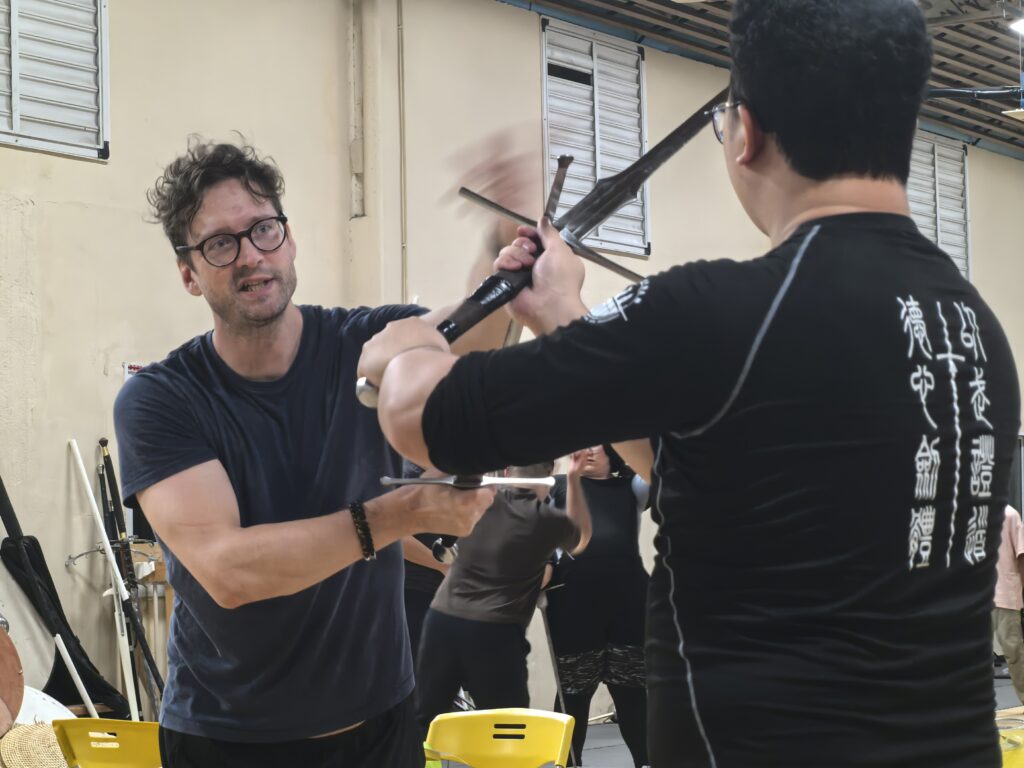
A critical component of speed is automation. Repetition allows a fencer to transfer mechanical decisions from conscious processing into trained motor patterns, freeing mental capacity for perception and tactical choice.
Every action that must be consciously assembled costs time and draws attention inward toward the movement itself instead of outward toward the exchange. The brain must identify the situation, select a solution, and then construct the motion. Under pressure, this chain becomes too slow.
So, naturally, we have to mention repetition and time with sword in hand. How to train this is however a different subject, but let’s briefly pause on the development stages of technique learning.
Motor learning research describes technical development as a staged process. A commonly used framework by Karl Meinel & Günter Schnabel divides skill acquisition into four phases: gross coordination, fine coordination, automation, and generalization. There’s another model often cited, by Fitts & Posner, using three stages: Cognitive stage, Associative stage and Autonomous stage. But for this article we’ll focus on the model by Meinel and Schnabel.
In the stage of gross coordination, the athlete learns the basic outline of a movement. The action is unstable, effortful, and heavily conscious. Reaction appears slow because attention is consumed by simply making the body perform the motion.
In fine coordination, the movement becomes more precise and economical. Unnecessary tension disappears, rhythm improves, and execution becomes smoother. However, performance is still fragile under pressure, because conscious control is still heavily involved.
The stage of automation is where speed truly begins to emerge. The movement no longer needs to be assembled step by step. Recognition and execution begin to fuse. The athlete does not construct the action each time; they release a trained pattern. This frees cognitive resources for perception and tactical decision-making. It is the transfer of mechanics into reliable motor memory so that attention can return to the exchange.
The final stage, generalization, allows the athlete to adapt automated actions across varied situations. Technique becomes flexible rather than rigid. The same motor solution can be applied at different distances, rhythms, and pressures without collapsing. At this level, technique is no longer separate from tactics. It is embedded inside them.
Seen through the lens of timing, each stage reduces the cognitive cost of action. As technique moves toward automation and generalization, more time becomes available for perception, anticipation, and initiative. The athlete does not primarily react faster because their nerves fire quicker. They react faster because fewer internal steps stand between recognition and action. For the coach, it’s important to understad how motor learning works in order to structure training
For the coach, this progression informs how training should be structured. The stages cannot be skipped without affecting speed, efficiency of motion, and adaptability. Technical freedom does not precede structure; it emerges from it. Gross coordination supports refinement, refinement supports automation, and automation supports adaptability.
Fatigue: the erosion of timing

Fatigue sits lower on the priority list than distance, structure, repetition, and initiative when we talk about coaching for speed and timing. But it still matters, because exhaustion attacks exactly the systems that allow time to exist.
Fatigue makes us slower in several interconnected ways. As exhaustion accumulates, posture deteriorates, breathing destabilizes, and perceptual clarity declines. The athlete begins to operate in shrinking windows. Initiative becomes harder to maintain. Continuity collapses not because the fencer misunderstands the exchange, but because the physical conditions required to inhabit it are no longer stable.
This is not simply a matter of muscle speed. It is a systemic failure. The body loses the ability to hold the geometry that timing depends on.
Physiological research shows that fencing imposes repeated high-intensity demands across long competition days. Even in shorter formats, athletes cycle through bursts of acceleration, deceleration, and recovery that tax both anaerobic and aerobic systems. Conditioning is therefore not separate from timing. It protects the structural and perceptual foundations that make timing possible in the first place.
A tired fencer does not merely react more slowly. They lose the ability to set up the prerequisites that allow time to work in their favour. Distance becomes inconsistent. Structure becomes fragile. Decision-making narrows. The exchange compresses.
This is why late-match errors often look tactical rather than physical. The athlete appears to make poor choices, abandon initiative, or disengage at the wrong moment. In reality, the perceptual and structural systems that support good decisions are already degraded. The fencer is no longer fighting where time exists. They are surviving inside collapse.
From a coaching perspective, conditioning is not only about endurance or power. It is about preserving access to time under stress. The goal is to delay the point at which fatigue dismantles structure and perception, but also to increase training intensity during practise.
Muscle speed and explosiveness: filling the time you create

Up to this point, we’ve focused on how athletes create and control time through distance, structure, initiative, and continuity. Only now does it make sense to talk about muscular speed.
This order is intentional.
Raw explosiveness is irrelevant if the athlete consistently enters exchanges where no usable time exists. A faster nervous system cannot rescue poor distance, broken structure, or misread initiative. Physical speed amplifies whatever tactical environment the athlete lives in. If that environment is collapsing, strength only accelerates collapse.
Placed in the correct context, however, muscular speed matters. Once an athlete reliably operates where time exists, the ability to fill that time with efficient force becomes decisive. Explosiveness determines how much action can be expressed inside a given window. But just as important is core stability, for example.
From a physiological perspective, fencing actions rely on rapid force production, elastic energy storage, and efficient neuromuscular coordination. Training that targets these qualities typically falls into a few broad categories: strength development, plyometric work, sprint and acceleration training, and technical speed drills that reinforce efficient motor patterns. None of these methods are unique to fencing, but their value depends entirely on how they are integrated with tactical training.
The coach’s responsibility is not simply to make the athlete faster in isolation. It is to ensure that increased speed is usable. Explosiveness must attach to structure. Acceleration must preserve balance. Speed training that degrades posture undermines the very timing it attempts to improve. All speed training must therefore be focused on working inside these principles.
This is also why muscular speed appears at the end of the model rather than the beginning. Physical capacity does not create timing by itself. It expands what can be done inside time that has already been engineered.
A powerful athlete who cannot manage distance remains late. A structurally stable athlete with moderate explosiveness can still dominate exchanges by living inside the opponent’s time. The highest level combines both: the ability to create time and the ability to fill it completely.

A few concluding words
Speed in fencing is not a mysterious gift and it is not a single physical quality. It is the visible result of how well an athlete manages time. Distance creates it. Structure converts it. Initiative controls it. Indes preserves it. Conditioning protects it. Muscle speed fills it.
Coaching timing is therefore not about chasing reflex. It is about building an environment in which athletes consistently operate where time still exists.
Give your athletes time, and they will be fast.
Take time away from them, and no amount of explosiveness will save the exchange.
References
Reaction time, decision-making, and expertise in fencing
Williams, L. R. T., & Walmsley, A. (2000). Response timing and muscular coordination in fencing: A comparison of elite and novice fencers. Journal of Science and Medicine in Sport, 3(4), 460–475.
Borysiuk, Z. (2008). Psychomotor reactions in fencing: Significance of stimulus type and visual perception. Human Movement, 9(1), 28–33.
Borysiuk, Z., & Waskiewicz, Z. (2008). Information processes, stimulation and perceptual training in fencing. Journal of Human Kinetics, 19, 63–82.
Hagemann, N., Schorer, J., Canal-Bruland, R., Lotz, S., & Strauss, B. (2010). Visual perception in fencing: Do the eye movements of fencers represent their information pickup? Attention, Perception, & Psychophysics, 72, 2204–2214.
Borysiuk, Z., Konieczny, M., Błaszczyszyn, M., Błach, W., & Obmiński, Z. (2024). The phenomenon of anticipation in fencing: An applicability approach. Frontiers in Sports and Active Living, 6, 1387013.
Cree, J. A., Oates, L. W., & Turner, A. N. (2026). Bounce or step: The evolutionary leap in elite épée fencing footwork and its impact on performance. Scientific Journal of Sport and Performance, 5(1), 1–9.
Perception, anticipation, and expert performance in open-skill sports
Abernethy, B., Neal, R. J., & Koning, P. (1994). Visual-perceptual and cognitive differences between expert, intermediate, and novice athletes. Applied Cognitive Psychology, 8, 185–211.
Williams, A. M., & Davids, K. (1998). Visual search strategy, selective attention, and expertise in sport. Research Quarterly for Exercise and Sport, 69(2), 111–128.
Müller, S., Abernethy, B., & Farrow, D. (2006). How do world-class cricket batsmen anticipate a bowler’s intention? Quarterly Journal of Experimental Psychology, 59, 2162–2186.
Motor learning, automation, and skill acquisition
Schmidt, R. A., & Lee, T. D. (2019). Motor Learning and Performance: From Principles to Application (6th ed.). Human Kinetics.
Magill, R. A., & Anderson, D. (2017). Motor Learning and Control: Concepts and Applications (11th ed.). McGraw-Hill.
Meinel, K., & Schnabel, G. (2007). Bewegungslehre – Sportmotorik: Abriss einer Theorie der sportlichen Motorik. Meyer & Meyer.
Şandra, A., Giurgiu, A., et al. (2025). Specific interventions for optimizing reaction speed in fencing in 10-12 year old children. GeoSport for Society, 23(2), 130–140.
Physiology, fatigue, and performance demands in fencing
Roi, G. S., & Bianchedi, D. (2008). The science of fencing: Implications for performance and injury prevention. Sports Medicine, 38(6), 465–481.
Turner, A., Miller, S., Stewart, P., Cree, J., Ingram, B., Dimitriou, L., Moody, J., & Kilduff, L. (2014). Strength and conditioning for fencing. Strength & Conditioning Journal, 36(1), 1–9.
Oates, L., Price, M., & Bottoms, L. (2023). Physiological demands of fencing: A narrative review. International Journal of Environmental Research and Public Health, 19(24), 16805.
Bottoms, L., Greenhalgh, A., & Sinclair, J. (2013). The effect of fatigue on reaction time in fencing. Journal of Human Kinetics, 37, 79–87.
Varesco, G., et al. (2025). Impacts of season phases and training variables on mental fatigue in real-world elite fencing. International Journal of Sports Physiology and Performance, 20(9), 1232–1240.
SciELO – Analysis of the effect of fatigue in fencing using reaction time lights (2025). Revista Brasileira de Cineantropometria & Desempenho Humano, 27.
Strength, explosiveness, and speed training
Cormie, P., McGuigan, M., & Newton, R. (2011). Developing maximal neuromuscular power. Sports Medicine, 41, 17–38.